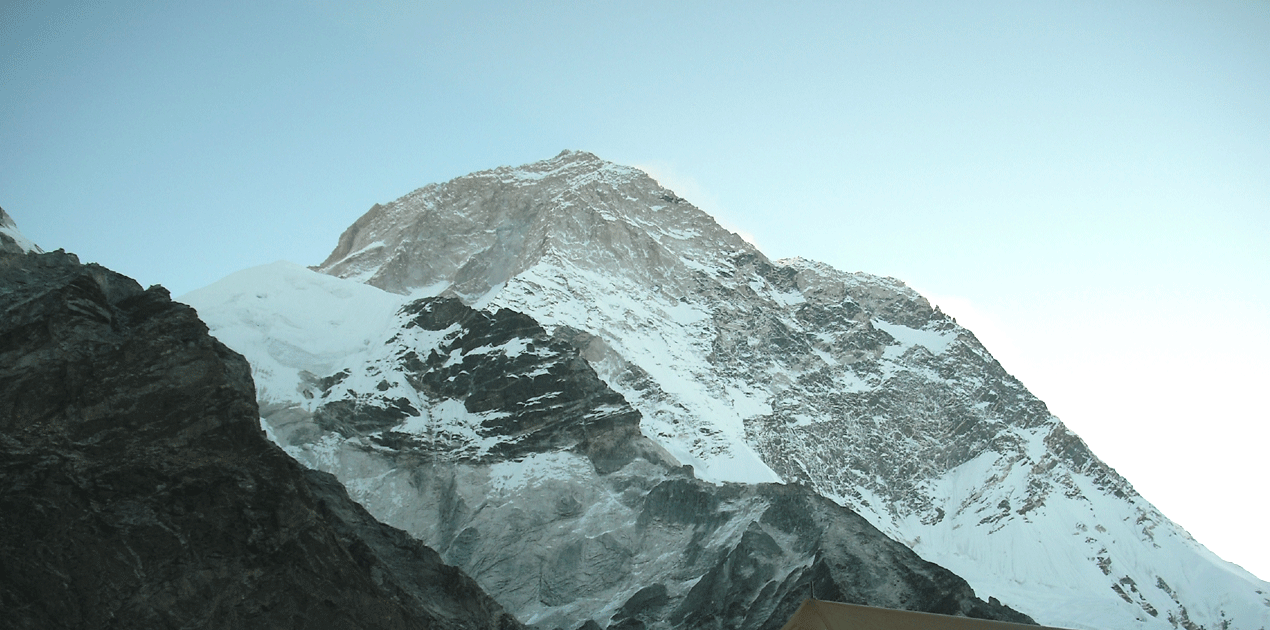
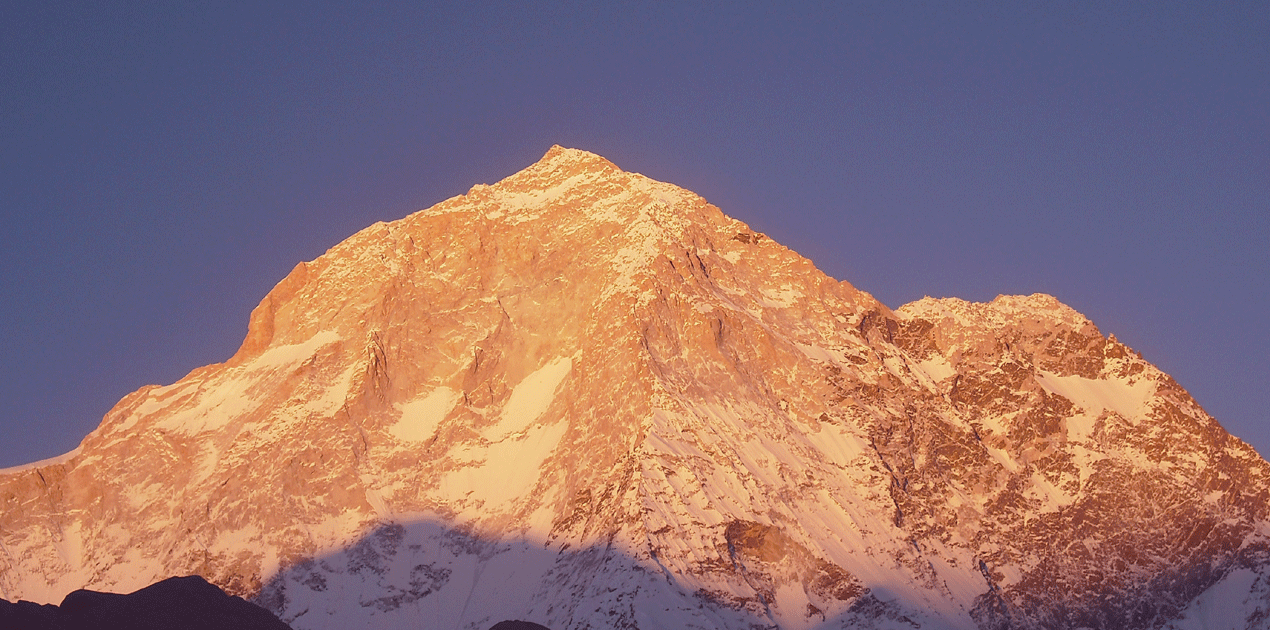
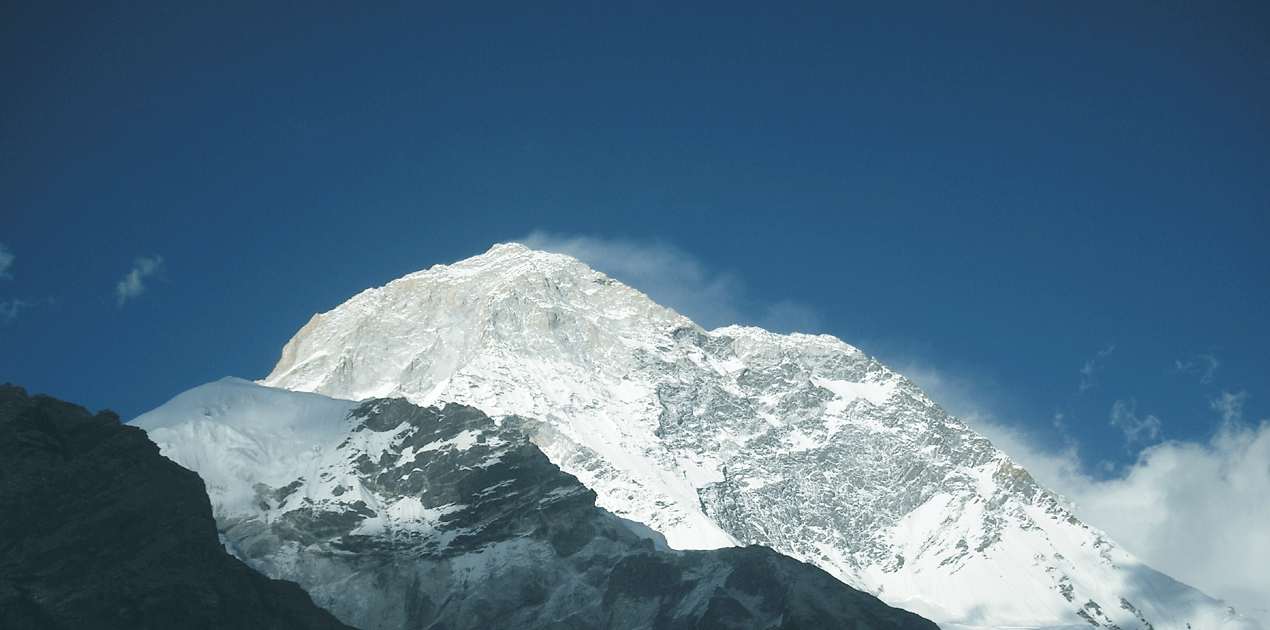
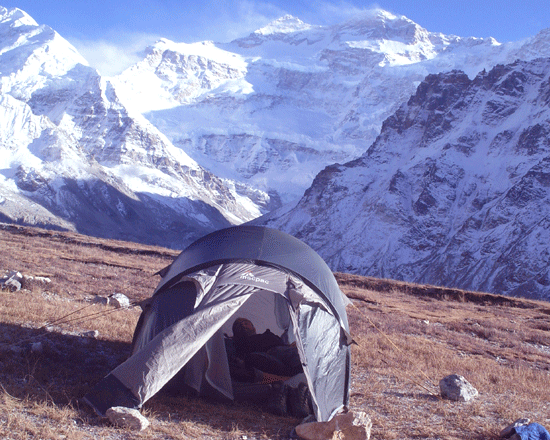
Mt. Makalu expeditions with its height of 8,485m, is the fifth-highest peak on Earth and the fourth-tallest mountain in Nepal above 8000 meters. Mt. Makalu lies 19km southeast of Mt. Everest, along the border between Nepal and China, in the eastern Himalayas. A natural wonder lies at the base of Mt. Makalu: The Barun Valley—also, home to stunning waterfalls that fall inside deep gorges trails to Sherpani Col Pass. The valley has diverse flora and fauna, and rich cultures from ethnic groups such as the Sherpa and Kirat. Even though visitors to this area are somewhat isolated, it is for sure that they will take with them a remembrance that will last a lifetime. Some of the stunning views captured from the Makalu summit point are:
- Mount Everest – World tallest Peak situated in the northwest.
- Lhotse – Fourth highest Peak close to Everest, also visible from Makalu.
- Cho Oyu – To the northwest of Makalu.
- Kangchenjunga Range– In northeast of Makalu,the third highest peaks in the world.
- Makalu-Barun National Park Peaks – Adds to the dramatic landscape.
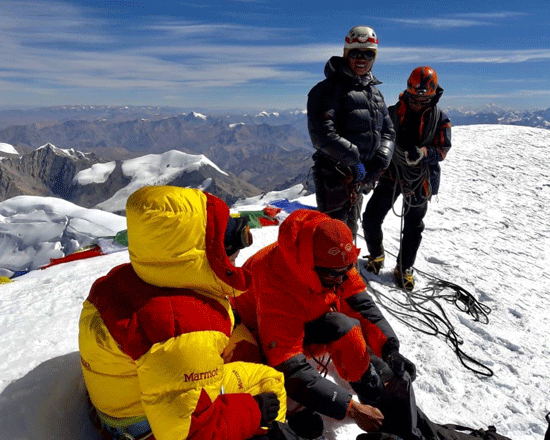
The views from Makalu are breathtaking, offering mesmerizing panoramic arrays of the Himalayas and a unique perspective on some of the world’s tallest peaks.
History of Makalu Expedition
Lionel Terray and Jean Couzy of the French Makalu Expedition led by Jean Franco climbed Mount Makalu for the first time on May 15, 1955. The next day, Franco, G. Magnone, and Sirdar Gyaltsen Norbu summited, followed by Bouvier, S. Coupe, Leroux, and A. Vialatte. By climbing Makalu’s north face and northeast ridge, via the saddle between Makalu and Kangchungtse (Makalu-La), the French established the standard route.
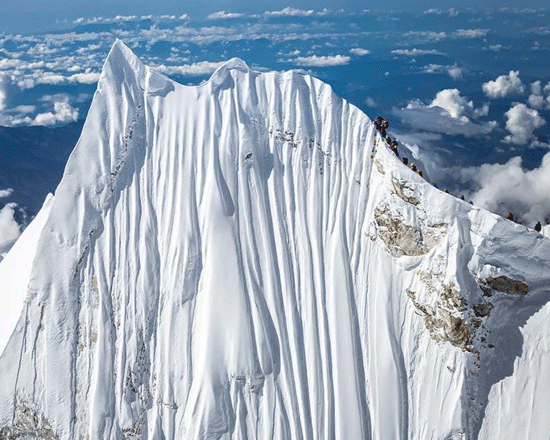
In 1955, the expedition led by the French team reached the summit of Makalu for the first time. Five of the first sixteen attempts were successful. While conducting a route survey of Mt. Everest, Sir Edmund Hilary took a photograph of Mt. Makalu in 1951. Since the first attempt to climb the peak, several other successful attempts have been made. The summit of Makalu resembles a pyramid. In comparison to other ridges, the South East and North West Ridges are more prominent. Most mountaineers use the North-Western ridge route to reach the summit. The Mt. The Makalu Expedition in Nepal is full of adventure and danger. In 1997, a Russian team scaled the most dangerous route, the west route. Following the most challenging route, they reached the summit on 21st May 1997. Makalu is a test of the endurance of a climber.
It is normal to set up the base camp at around 5,600m, followed by four more camps before reaching the top. Camp 1 is at 6,100m, camp 2 is at 6500m, camp 3 is at 7400m, and camp 4 is at 7800m. Before the ascent, Makalu Top can climb Baruntse peak a acclimatize or just rest and up and down around the Makalu base camp territory
When is the right time to go for Makalu Expedition?
Makalu’s prime climbing season is affected by shifting temperatures in the Himalayas, which are unpredictable and extreme. The most ideal time to climb Mount Makalu is in spring and autumn. The weather and temperature are ideal for the Makalu Expedition. The spring season begins in April and lasts until May, while the autumn season begins in September and ends in November. During these seasons, there is no risk of snowfall or rainfall. You can enjoy mountain climbing in the beauty of nature with blooming flowers and clear skies.
Historical Overview of Makalu Expediton
- First Ascent:
- Expedition Team: The first successful ascent in May 15, 1955 was made by a French expedition led by Lionel Terray and Jean Couzy. They were part of a larger team that included other climbers and support staff.
- Significance: The Makalu Expedition was a significant achievement in the history of mountaineering due to the peak’s extreme altitude and challenging climbing conditions.
- Early Attempts:
- 1950s–1960s: Several attempts were made before the successful ascent in 1955. The early Makalu expeditions faced numerous challenges, including harsh weather, technical climbing difficulties, and the mountain’s remote location.
- Subsequent Ascents:
- 1960s–1970s: After the first successful ascent, Makalu saw a gradual increase in attempts, with climbers facing challenges such as high-altitude conditions and difficult terrain. The number of successful ascents remained relatively low due to the mountain’s difficulty.
- Notable Expeditions: In 1971, an American team led by Jim Whittaker made a significant ascent. In the late 1970s, several other expeditions reached the summit, continuing to push the boundaries of high-altitude climbing.
- Modern Expeditions:
- 1990s–2000s: Advances in climbing technology and improved weather forecasting led to more successful ascents. The number of climbers attempting Makalu increased as the mountain became more accessible due to better logistical support and increased popularity among climbers.
- 2000s–2010s: The peak continued to attract experienced climbers. Significant ascents during this period included the use of modern equipment and techniques to overcome the mountain’s challenges.
Recent Historic Events of Makalu Expedition
2011 – First Winter Ascent:
-
- Climbers: Italian team led by Simone Moro, alongside French climber Emmanuel Couche and Indian climber Nives Meroi.
- Achievement: On October 1, 2011, the team successfully reached the summit of Makalu, marking the first winter ascent of the peak. This achievement was significant because winter ascents are much more challenging due to extreme cold and weather conditions.
2014 – Successful Climb by the First Nepali Team
-
- Climbers: A team of Nepali climbers, led by Mingma Gyabu Sherpa, became the first Nepali team to successfully summit Makalu on May 15, 2014.
- Significance: This ascent was a notable event in Nepalese mountaineering history, highlighting the skills and achievements of local climbers.
2015 – Impact of the Earthquake:
-
- Context: The devastating earthquake that struck Nepal in April 2015 had significant effects on climbing activities in the region, including Makalu. The earthquake caused avalanches and landslides, impacting the safety and logistics of expeditions.
- Response: The climbing season was affected, and many expeditions were canceled or postponed due to the aftermath of the earthquake.
2018 – Record-Breaking Climbs:
-
- Climbers: A record-breaking season occurred with multiple successful summits. Notable climbers included renowned mountaineers who achieved successful ascents during this period.
- Significance: The year saw an increase in the number of climbers successfully reaching the summit, reflecting advancements in climbing technology and improved support infrastructure.
2021 – Successful Ascent Amidst COVID-19 Challenges:
-
- Climbers: Despite the challenges occured by the COVID-19 pandemic, climbers were powerful to reach the summit of Makalu.
- Significance: This period demonstrated the consistency and adaptability of the climbing community, as they navigated the complexities of pandemic-related restrictions while pursuing their goals.
Recent Trends and Achievements of Makalu Expedition
- Increased Interest: There has been a growing interest in Makalu expedition, with more climbers attempting and succeeding in summiting the peak. Advancements in climbing technology, improved weather forecasting, and better logistical support support this trend.
- Sustainability and Conservation: Makalu expeditions have also focused on sustainability and minimizing environmental impact, with efforts to manage waste and preserve the pristine conditions of the mountain environment.
The mountain’s remote location and demanding conditions continue to attract experienced climbers and contribute to its rich legacy in high-altitude climbing.
How Difficult is the Makalu Expedition?
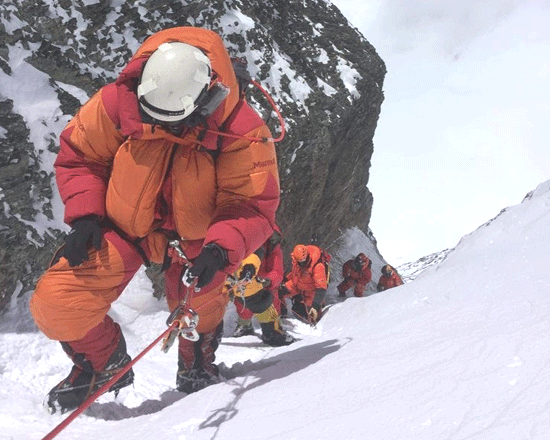
Makalu Expedition is one of the world’s most technically challenging mountains and difficult climbs of the eight-thousanders. Moreover, it is considered one of the most difficult mountains in the world to ascend. Technical sections will test you to the core, with freezing temperatures, oxygen levels, and bulky clothing. Due to its notorious knife-edge ridges and steep pitches, you will need to use fixed ropes, crampons, and axes. Climbers can practice using them on training peaks before attempting an actual climb. Other factors such as sleep deprivation, frostbite, altitude sickness, etc., should also be considered. It is best to reach the summit before noon to avoid strong afternoon winds. In addition to these factors, exhaustion also increases the difficulty level. In order to prevent this, the Makalu Expedition includes an acclimatization walk and a short hour-long walk. The final ascent of the summit pyramid involves technical rock climbing.
Nepal Wilderness Trekking PVT is a Nepali expedition and peak climbing company founded over 20 years ago. Therefore, Nepali local companies perform all of the legal, administrative, logistical, guiding, and support services in Nepal, as well as being legally responsible for the expedition’s safe and responsible conduct with competitive expedition costs. All of our team are experts in climbing expeditions in the Nepalese Himalayas