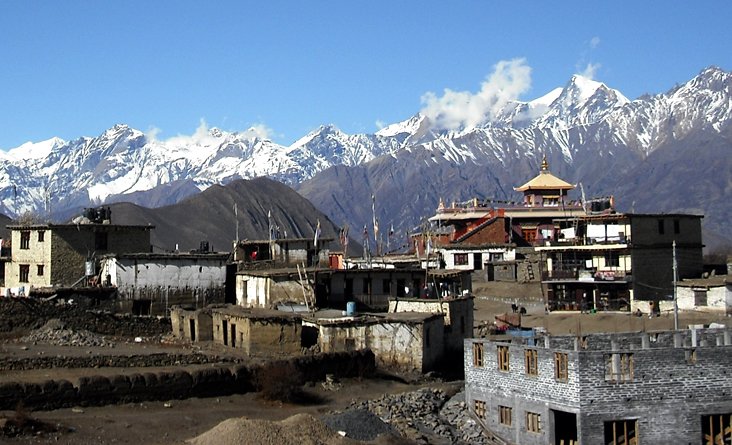
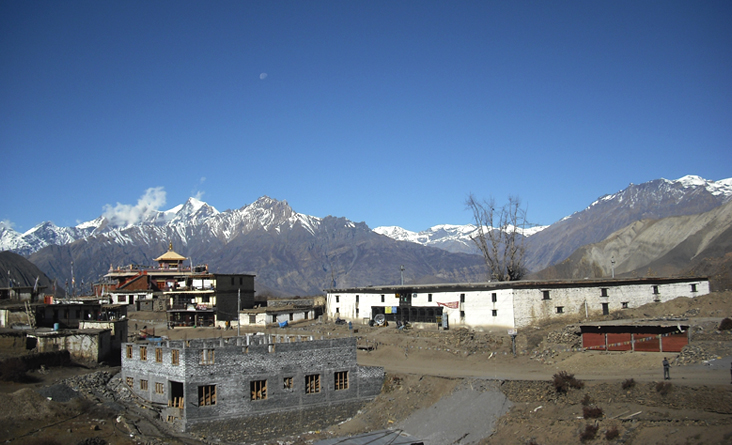
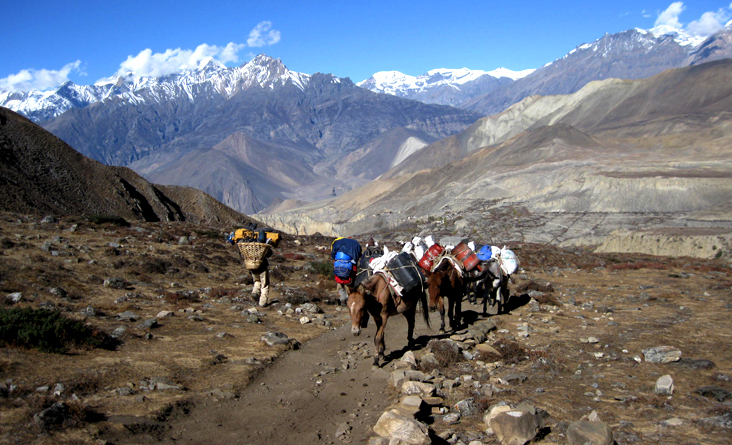
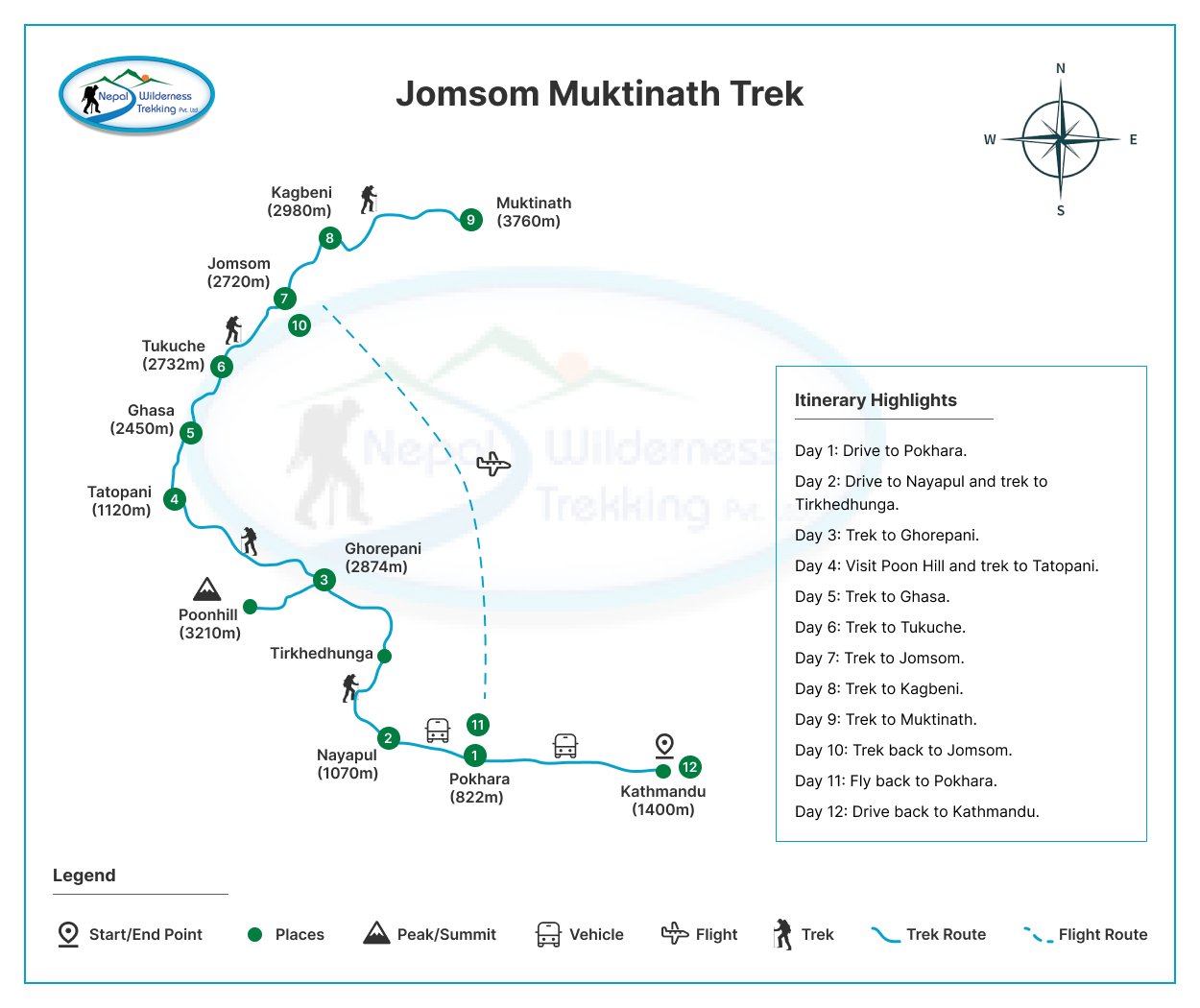
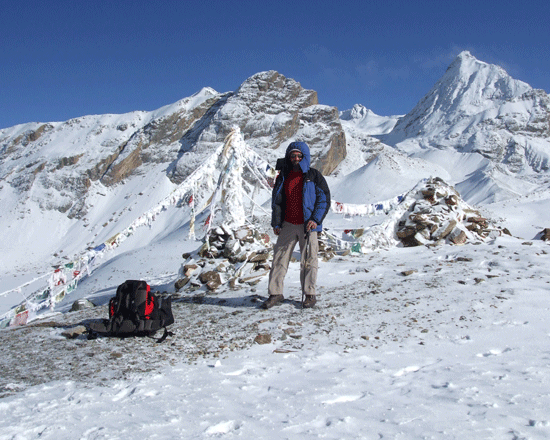
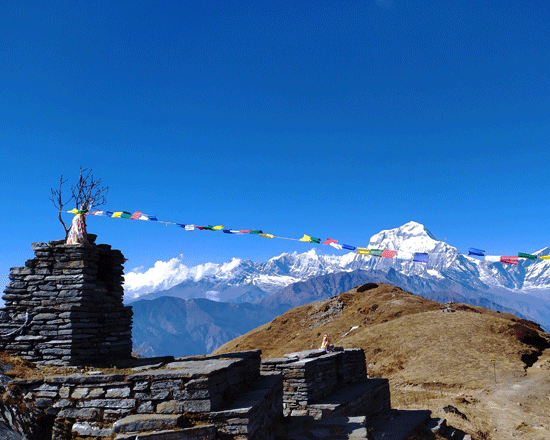
The Jomsom Muktinath Trek is a captivating journey through the diverse landscapes and rich cultural heritage of the Annapurna region in Nepal. Jomsom Trek offers a large amount of natural beauty, spiritual significance, and unique cultural experiences, making it a must-visit for passionate trekkers and adventure enthusiasts.
The Jomsom Muktinath Trek follows the scenic Kali Gandaki valley, home to the indigenous Thakali tribes, and is one of Nepal’s most significant fossil sites for ammonites. As we journey through the Annapurna region, we traverse paddy fields and small villages inhabited by Gurung and Thakali residents. At Tatopani, trekkers can relax in natural hot springs. The trek also provides access to the Upper Mustang region via Jomsom and Kagbeni, gateways to this remote area. In Muktinath, a sacred pilgrimage site for all Hindus and Buddhists, we explore an area with 108 water taps and significant spiritual importance. After visiting Muktinath, we descend to Jomsom, marking the entrance to the ‘Forbidden State of Mustangs.’ This trek promises a memorable adventure in the Jomsom Muktinath area.
Jomsom and Muktinath are prominent destinations in the Mustang region of Nepal. Jomsom, situated on the bank of the Kali Gandaki River, is a popular starting point for the Upper Mustang treks. Muktinath village is 3,800 meters in elevation and is a revered pilgrimage site for both Hindus and Buddhists.
The Jomsom Muktinath Trek, also known as the Lower Mustang Trek, diverges at the Kagbeni village checkpost, distinguishing it from the Upper Mustang Trek. While the lower trek requires ACAP and TIMS permits, the upper Mustang trek necessitates a Restricted Area Permit.
History and Culture
The Jomsom Muktinath trek provides insight into the rich history and culture of the Thakali people, followers of Buddhism, who originated from the Thak Khola – Kali Gandaki valley. Historically, the Thakali migrated from Tibet, bringing with them a unique blend of Buddhist traditions, including sacred shrines and prayer wheels, which add to the cultural tapestry of the Mustang region.
Beauty of the Jomsom Muktinath Trek
The Jomsom Muktinath trek lies in the Gharpajhong Rural Municipality ward no. 4, also known as Dzongsam, in Mustang District. At an altitude of 2,700 meters (8,900 ft) in Gandaki Province, this area is graced by the majestic peaks of Dhaulagiri and Nilgiri. The town of Jomsom Airport, situated along the Kali Gandaki River, is known for its unique black fossilized stones called Shaligrams, which hold significant religious value in Hindu culture.
The Kaligandaki River, originating in the Mustang district, carves the deepest gorge in the world. This region, with its rugged terrain and highlands, is a highlight of the Mustang trek. Jomsom, the district headquarters, serves as an administrative and commercial hub, with regular flights connecting it to Pokhara.
Scenic Highlights
The Jomsom Muktinath Trek offers views of numerous peaks, including Nilgiri, Thorong Peak, Thampu’s Peak, Tukuche Peak, and the towering Dhaulagiri Himal (8,167 meters). Trekkers will hike through the world’s deepest gorge, the Kaligandaki River Gorge. The Jomsom trek also includes visits to ancient monasteries, local tribes, and caves, enriching the cultural experience. This trek is doable with young kids.
Jomsom Bazaar
Located on the banks of the Kali Gandaki River, Jomsom is a peaceful town that hosts the Mustang district headquarters. It features a small airport, tea houses, hospitals, pharmacies, local markets, high schools, and bus stations.
Muktinath
The trails to Muktinath from the Thorong La pass via the Annapurna Circuit Trek start in Manang on the Himalayas’ Manang side. Muktinath Temple, also known as Muktinath-Chumig Gyatsa, is a sacred site revered by both Hindus and Buddhists. Its history is rich and deeply intertwined with the cultural and religious traditions of the region.
Hindu Significance
- Vishnu Temple:
- Muktinath is considered one of the eight sacred shrines (Svayam Vyakta Kshetras) dedicated to Lord Vishnu and one of the 108 Divya Desams (holy abodes of Vishnu).
- The name “Muktinath” derives from the Sanskrit words “Mukti” (salvation) and “Nath” (god). Symbolizing the belief that visiting this temple grants moksha (liberation) from the cycle of birth and rebirth.
- Mythological Origins:
- According to Hindu mythology, Lord Vishnu appeared in the form of Shaligrama (a sacred black stone) at Muktinath. These stones are found in the Kali Gandaki River and are considered highly sacred.
Buddhist Significance
- Chumig Gyatsa:
- In Tibetan Buddhism, people know Muktinath as Chumig Gyatsa, meaning “Hundred Waters,” and consider it one of the 24 Tantric places in their tradition. They also associate the temple with Padmasambhava (Guru Rinpoche), who is believed to have meditated here on his way to Tibet.
- Elements of Tibetan Buddhism:
- The temple complex includes a Buddhist monastery and is surrounded by numerous prayer wheels turned by pilgrims.
- The wall behind the temple features 108 water spouts, representing the 108 holy springs, and devotees bathe under these spouts for purification.
Architectural and Cultural Aspects
- Temple Structure:
- The main shrine of Muktinath is a pagoda-style temple, reflecting a blend of Nepalese and Tibetan architectural styles.
- The deity in the main shrine is a golden statue of Vishnu, worshipped by Hindus and Buddhists.
- Surrounding Area:
- The temple complex includes other smaller shrines, a Shaligrama riverbed, and a Dharmashala (rest house) for pilgrims.
Challenges and Conservation
- Environmental Impact:
- Increased tourism has raised concerns about environmental degradation, including waste management and the preservation of natural habitats.
- Conservation efforts are ongoing to protect the region’s unique ecosystem and cultural heritage.
- Accessibility:
- The construction of roads has improved accessibility to some parts of the gorge, but it has also brought challenges related to modernization and the preservation of traditional ways of life.
The Kali Gandaki Gorge stands as a natural marvel and a testament to the powerful geological forces that shape our planet. Its immense depth, rich biodiversity, and cultural significance make it a unique destination for adventurers and nature enthusiasts.
Historical Developments
- Ancient Origins:
- The date of the temple’s establishment is unknown, but it has been a pilgrimage site for centuries, attracting devotees from Nepal, India, and Tibet.
- Modern Era:
- Over time, the temple has been maintained and renovated by various local and regional authorities, preserving its historical and religious significance.
- It remains a popular pilgrimage destination, especially during the festivals of Rishi Tarpani (Janai Purnima) and Ram Navami.
Jomsom Muktinath Trek Highlights
- Visit Pokhara, known as the city of lakes, to watch the sunset over Phewa Lake.
- Experience Ghorepani Poon Hill’s waterfall, rice terraces, and the changing colors of the white mountains at sunset.
- Pass by three of the ten highest mountains in the world: Annapurna, Dhaulagiri, and Everest.
- Walk along the Kali Gandaki River with views of peaks and natural hot springs (Tatopani).
- Explore the source of fossilized ammonites, significant in Buddhist belief.
- Immerse in the culture of the isolated Thakali ethnic group, known for their traditional “Bakhu” attire.
- Find peace and happiness in the unique Annapurna region.
Best Time to Trek
- Spring (March to June): Moderate temperatures, clear skies, blooming rhododendrons.
- Autumn (September to December): Stable weather and clear mountain views.
Preparation and Tips
- Physical Fitness: A moderate to good level of fitness is required.
- Acclimatization: Important to prevent altitude sickness, especially at higher altitudes like Muktinath.
- Packing: Layered clothing, good trekking boots, and essentials like water purification tablets, a first aid kit, and snacks. For more information about the trekking equipment list, we have attached the link.
Mountain Views from Jomsom-Muktinath Trek
The Jomsom-Muktinath trek in Nepal offers stunning views of several prominent Himalayan peaks. Here are the major mountains you can see along this trek:
- Dhaulagiri (8,167 meters / 26,795 feet): The seventh-highest mountain in the world, visible from various points along the trek.
- Nilgiri (7,061 meters / 23,166 feet): Known for its striking profile, Nilgiri has three main peaks: Nilgiri North (7,061 meters), Nilgiri Central (6,940 meters), and Nilgiri South (6,839 meters).
- Annapurna I (8,091 meters / 26,545 feet): The tenth-highest mountain globally, part of the Annapurna massif, visible from parts of the trek.
- Tukuche Peak (6,920 meters / 22,703 feet): A notable peak near the Dhaulagiri range, often seen from the Jomsom area.
- Thorung Peak (6,144 meters / 20,160 feet): Near the Thorung La pass, a significant part of the Annapurna Circuit.
- Tilicho Peak (7,134 meters / 23,405 feet): Located near Tilicho Lake, part of the broader Annapurna range.
These mountains create a stunning backdrop for trekkers, offering an unforgettable Himalayan experience.
Note
The Nepal Wilderness Trekking agency offers valuable packages for the Jomsom Muktinath Treks, with expert guides and porters familiar with the region.
For those with limited time, the Jomsom Muktinath trek can also be completed in 5 days, starting from Jomsom. This shorter trek includes a flight from Pokhara to Jomsom, a trek to Kagbeni and Muktinath, sightseeing, and a return to Jomsom before flying back to Pokhara.
Overall, the Jomsom Muktinath trek is a fantastic option for experiencing the natural beauty and cultural richness of Nepal’s Himalayas.