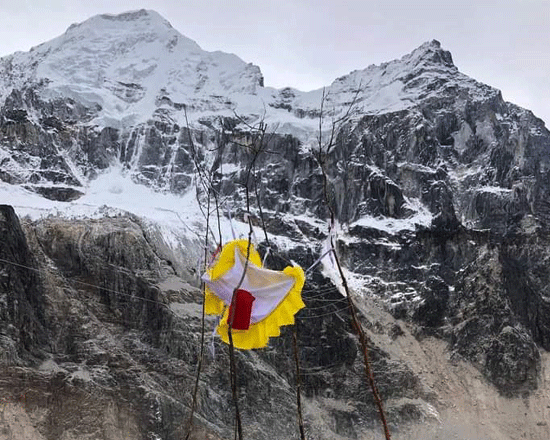
The Tashi Lapcha Pass Trek is one of Nepal’s most challenging and rewarding high-altitude trekking adventures, linking the hidden Rolwaling Valley with the Everest region through the dramatic Tashi Lapcha Pass at 5,755 meters. Far from the crowded trails of classic Everest Base Camp, this remote Himalayan route offers a true wilderness experience for trekkers seeking solitude, alpine beauty, and a demanding mountain crossing in one of Nepal’s least explored trekking regions.
This extraordinary trek begins in the lower hills of Dolakha and heads towards the sacred Rolwaling Valley, a rugged and culturally rich corridor tucked beneath the towering peaks of Gauri Shankar and Melungtse. The trail follows an ancient trade and pilgrimage area through Sherpa villages, dense forests, glacial rivers, yak pastures, and high alpine terrain before reaching the icy wilderness of the Trakarding Glacier. From there, trekkers make the demanding crossing of Tashi Lapcha Pass, the dramatic gateway into the Khumbu region, before descending into the famed Sherpa settlements of Thame and Namche Bazaar.
The Tashi Lapcha Pass Trek is not simply a trek; it is a full Himalayan expedition-style journey. It combines the cultural charm of remote mountain villages, the beauty of pristine glacial landscapes, the thrill of crossing one of Nepal’s most technical trekking passes, and the satisfaction of completing one of the country’s great wilderness routes. It is ideal for experienced trekkers who want more than a standard teahouse trek and are searching for a genuine Himalayan adventure.
Why Choose the Tashi Lapcha Pass Trek?
The Tashi Lapcha Pass Trek stands apart from other trekking routes in Nepal because it offers a rare combination of remoteness, challenge, and dramatic mountain scenery. While many trekkers dream of Everest, far fewer discover the hidden beauty of Rolwaling Valley and the adventure of crossing into Khumbu through one of Nepal’s wildest mountain passes.
One of the most compelling reasons to choose the Tashi Lapcha Pass Trek is its remoteness. Rolwaling Valley remains one of Nepal’s least visited trekking regions, preserving a sense of wilderness and authenticity that has disappeared from many commercial trekking routes. The villages are quiet, the trails are uncrowded, and the mountains feel immense and untouched.
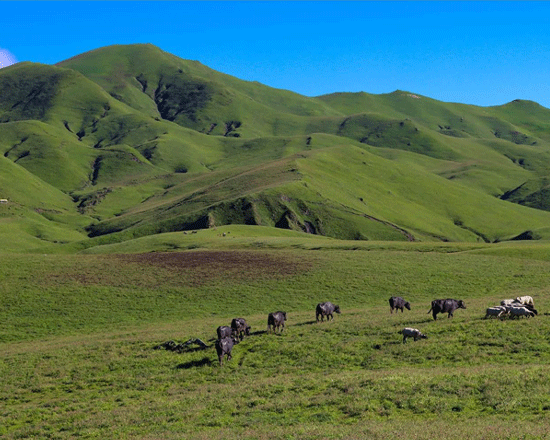
The trek also offers remarkable geographic diversity. Within one journey, trekkers pass through subtropical foothills, temperate forests, Sherpa villages, alpine meadows, glacial moraines, and ice-covered high mountain terrain. The contrast between the deep valleys of Rolwaling and the open high-altitude landscapes near the pass creates a constantly changing trekking experience.
The crossing of Tashi Lapcha Pass itself is one of the trek’s greatest highlights. At 5,755 meters, the pass is physically demanding and often snow-covered, with glacier travel adding a more technical dimension than standard trekking routes. For experienced trekkers, this is one of the most satisfying high mountain crossings in Nepal.
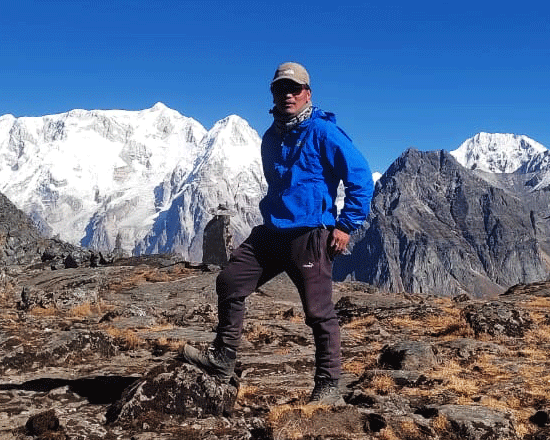
Another major reason to choose this route is the scenery. The trail offers magnificent views of Gauri Shankar, Melungtse, Tengi Ragi Tau, Cho Oyu, and numerous peaks of the Everest region. The turquoise waters of Tsho Rolpa Lake, one of Nepal’s largest glacial lakes, add another unforgettable visual highlight.
For trekkers seeking a less crowded alternative to Everest, the Tashi Lapcha Pass Trek is one of Nepal’s finest hidden adventures.
Route Overview
The Tashi Lapcha Pass Trek begins with a scenic drive from Kathmandu to the Dolakha region, followed by a jeep ride to the trailhead near Chetchet. From here, the trek enters the lower Rolwaling region and climbs steadily toward Simigaon, a beautiful hillside village with sweeping views of Gauri Shankar.
Beyond Simigaon, the trail enters deeper into the Rolwaling Valley, passing through forested paths, suspension bridges, and traditional settlements such as Dongang and Beding. Beding is one of the largest villages in Rolwaling and an important acclimatization stop surrounded by dramatic mountain scenery.
From Beding, the route continues to Na, a high-altitude summer settlement used by herders and trekkers as a vital acclimatization point. A side trip to Tsho Rolpa Lake is one of the highlights of this section, offering spectacular views of glacial water framed by snow peaks.
Above Na, the trail becomes increasingly rugged and alpine as trekkers approach the Trakarding Glacier. This section marks the transition from trekking to a more expedition-style route. The path crosses moraine, glacial debris, and ice, requiring careful footing and often the support of ropes and mountaineering awareness.
The crossing of Tashi Lapcha Pass is the most demanding part of the trek. Reaching 5,755 meters, the pass can involve snow slopes, icy terrain, and challenging route conditions depending on the season. The reward is immense: a dramatic high Himalayan crossing into the Khumbu region.
After the pass, the trail descends toward Thame village, one of the oldest Sherpa villages in the Everest region. From here, the route follows a more established trail to Namche Bazaar before concluding in Lukla with a flight back to Kathmandu.
Tashi Lapcha Pass Trek Difficulty
The Tashi Lapcha Pass Trek demands strong physical fitness, previous high-altitude trekking experience, and solid endurance. This route suits experienced trekkers who can handle long days, remote terrain, and demanding mountain conditions.
Beginners should not attempt this trek. Unlike standard trekking routes in Nepal, the Tashi Lapcha Pass Trek leads through remote sections with limited facilities, long walking days, rough trails, and glacier travel. Trekkers must prepare for difficult terrain, high altitude, unpredictable weather, and physically demanding days.
The most difficult section is the crossing of the Tashi Lapcha Pass. Snow, ice, loose moraine, and glacier conditions can make this section technical, especially in poor weather or early-season conditions. Depending on conditions, trekkers may need to use crampons, ropes, and basic mountaineering equipment.
Altitude is another major challenge. The route gradually ascends above 5,000 meters, and proper acclimatization is essential. Beding and Na are important acclimatization stops and should not be rushed.
Because of its remoteness, rescue logistics are more complicated than on mainstream trekking routes. This makes preparation, pacing, and experienced guiding especially important.
For trekkers with solid endurance, mountain experience, and a sense of adventure, the challenge of Tashi Lapcha Pass is what makes it so rewarding. This route also forms part of the Great Himalaya Trail, which is Nepal’s ultimate long-distance trekking network stretching from east to west across the entire Himalayan range.
Best Time for Tashi Lapcha Pass Trek
Spring and autumn offer the best time for the Tashi Lapcha Pass Trek because they bring stable weather and safer pass conditions.
Spring, from April to May, offers one of the best trekking seasons for this route. During spring, trekkers enjoy milder temperatures, blooming rhododendron forests in the lower valleys, and excellent mountain views. Snow often remains on the higher sections of the pass, but stable weather usually keeps conditions manageable.
Autumn, from October to November, provides the most reliable season for the Tashi Lapcha Pass Trek. After the monsoon, clear skies, excellent visibility, and dry trail conditions create ideal trekking conditions. Autumn gives trekkers the safest and most dependable window for crossing the pass.
Winter brings heavy snow, freezing temperatures, and difficult pass conditions, so most trekkers avoid this season. Deep snow often makes the crossing dangerous or impossible.
Permits Required for Tashi Lapcha Pass Trek
Trekkers need several permits for the Tashi Lapcha Pass Trek because the route crosses multiple protected regions.
Trekkers need the Gaurishankar Conservation Area Permit to enter the Rolwaling region. This permit is required for the lower and central sections of the trek.
As the route enters the Everest region, trekkers also need the Sagarmatha National Park Permit.
In addition, trekkers need the Khumbu Pasang Lhamu Rural Municipality Permit when they enter the Khumbu region.
Depending on the trekking arrangement and current regulations, trekkers may also need a TIMS card through a registered trekking agency.
Trekkers should arrange all permits in advance through a reliable trekking agency to ensure smooth logistics and full compliance with current regulations.
Accommodation and Food
Accommodation on the Tashi Lapcha Pass Trek varies significantly between Rolwaling and Khumbu.
In the Rolwaling Valley, teahouses are basic but welcoming. Facilities are simple, rooms are modest, and menus are limited compared to popular trekking regions. Trekkers should expect traditional mountain hospitality rather than comfort.
Common meals include Dal Bhat, noodles, fried rice, potatoes, Tibetan bread, soup, porridge, tea, and simple local dishes. Food is filling and practical, though menu variety decreases with altitude.
In the upper sections beyond Na, camping support is required. After crossing into Khumbu, accommodation improves significantly. In villages such as Thame and Namche Bazaar, teahouses are more developed and offer better food variety and more comfortable facilities.
Guide and Porter for Tashi Lapcha Pass Trek
Hiring an experienced guide for the Tashi Lapcha Pass Trek is strongly recommended and often essential for safety.
This is not an ideal trek for independent trekkers. Route finding in the upper valley can be difficult, and glacier sections require careful navigation. Weather can change quickly, and safe decision-making is critical.
An experienced guide provides navigation, local knowledge, acclimatization support, and safety management during the pass crossing. This significantly improves both safety and success.
A porter is also highly recommended. Carrying a heavy pack at high altitude, especially before crossing the pass, adds unnecessary fatigue and reduces safety margins.
For most trekkers, a guide and porter make the trek safer, more efficient, and far more enjoyable.
Physical Fitness and Preparation
Strong physical fitness is essential for the Tashi Lapcha Pass Trek. Trekkers should be comfortable walking 6 to 8 hours a day on steep, uneven terrain for multiple consecutive days.
Cardiovascular endurance, leg strength, and stamina are especially important. Training should include uphill hiking, stair climbing, endurance walks, and core conditioning.
Previous trekking experience above 4,000 meters is highly recommended. Trekkers with prior experience in Everest, Manaslu Circuit, Annapurna, or similar high-altitude regions will be much better prepared.
Mental preparation is equally important. This trek requires patience, adaptability, and resilience in remote and demanding mountain conditions.
Safety and Acclimatization
Safety and proper acclimatization are essential for a successful Tashi Lapcha Pass Trek, as the route reaches high altitude and crosses remote glacial terrain. A gradual ascent with proper rest days is the best way to reduce the risk of altitude sickness and improve safety.
Beding and Na are the most important acclimatization stops before heading higher toward Tsho Rolpa, Trakarding Glacier, and Tashi Lapcha Pass. These villages allow the body to adjust to altitude and should not be rushed. Trekkers should walk at a steady pace, stay hydrated, eat well, and monitor symptoms such as headache, nausea, or unusual fatigue.
The weather can change quickly in the upper Rolwaling Valley and near the pass. Snow, wind, and poor visibility may affect trail conditions, especially on glacier sections, so flexibility is important. An experienced guide is highly recommended for monitoring acclimatization, assessing conditions, and ensuring safe passage.
If trekkers have extra time and mountaineering experience, the trek can be extended with optional climbs of Ramdung Peak (5,925m) in Rolwaling or Pachermo Peak (6,273m) after crossing into Khumbu. Both peaks add excellent acclimatization and a more adventurous alpine experience, but they require extra days, technical gear, and proper climbing support.
Conclusion
The Tashi Lapcha Pass Trek is one of Nepal’s most adventurous and rewarding high mountain journeys. It is a trek for those who seek more than popular trails and standard trekking routes. With its remote valleys, Sherpa culture, glacier landscapes, alpine lakes, and dramatic high pass crossing, it offers one of the most complete wilderness trekking experiences in Nepal.