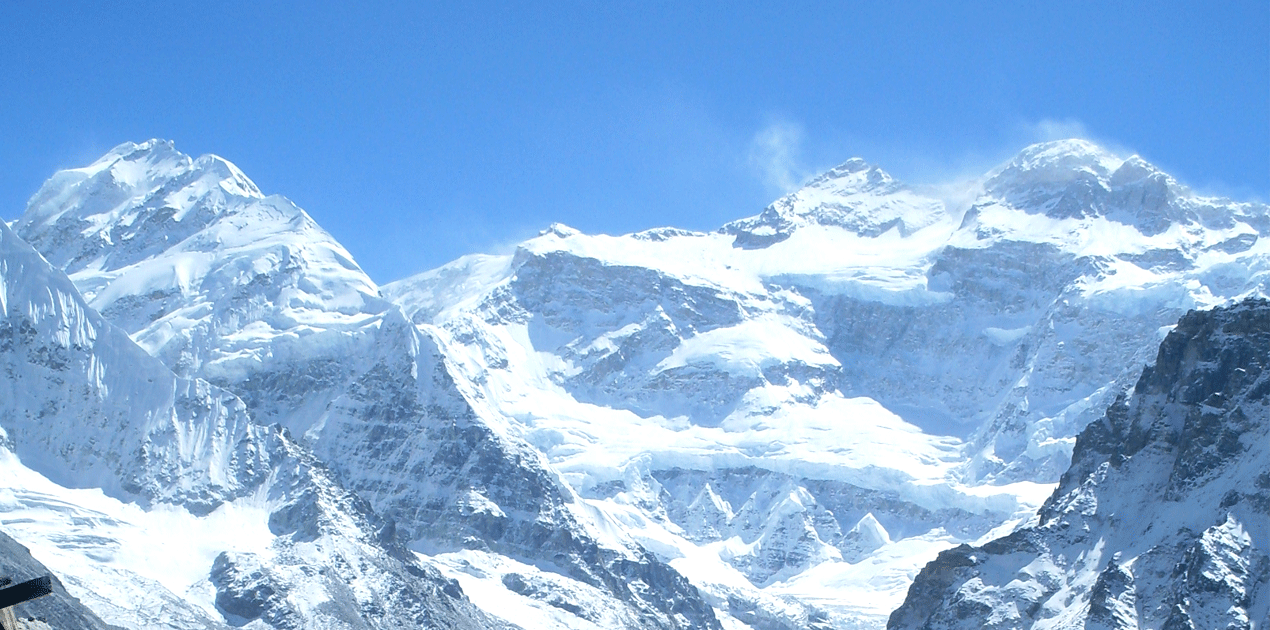
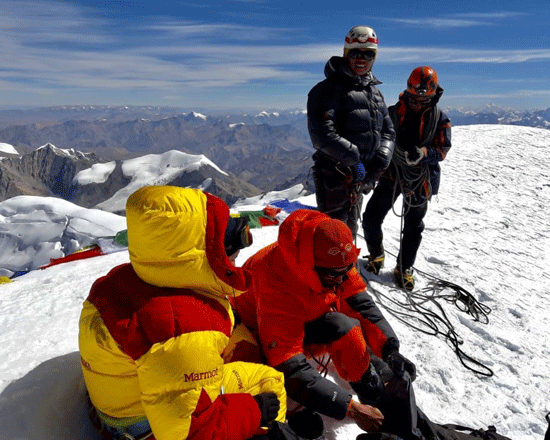
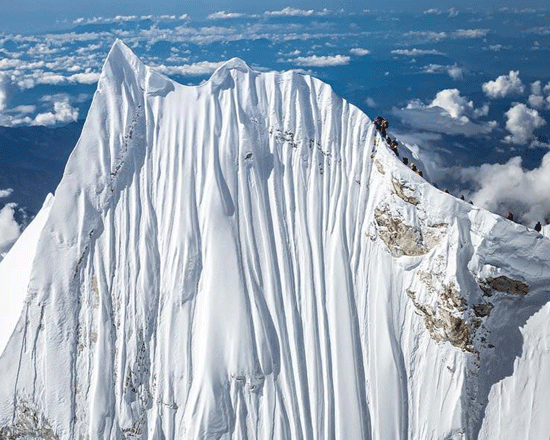
The Kanchenjunga Expedition presents a formidable challenge, offering adventurers the opportunity to conquer one of Nepal’s most challenging peaks and the world’s third-highest mountain. The Kanchenjunga Himal boasts four distinct summits, three towering high beyond the remarkable altitude of 8,000 meters above sea level. The highest among them is Kanchenjunga I, standing proudly at 8,586 meters. Following closely is Kanchenjunga West at 8,505 meters, while Kanchenjunga South reaches an impressive 8,494 meters. The lowest of these summits, Kangbachen, still commands a formidable presence at 7,903 meters. Collectively, these peaks form a majestic cross-like structure, with each summit representing one of its arms, connected by four primary ridges.
Formation
- Kanchenjunga, like other Himalayan peaks, formed due to the tectonic collision of the Indian and Eurasian plates. This geological activity began around 50 million years ago and resulted in the uplift of the Himalayan range.
- The name “Kanchenjunga” is derived from the Tibetan words “Kanchen” (meaning “five treasures”) and “Junga” (meaning “snow”). It reflects the mountain’s status as a sacred and revered site, representing the five treasures of snow, grain, gold, jewels, and books.
Kanchenjunga’s Rich History
Kanchenjunga, often referred to as one of the ‘five treasures of the high snow,’ holds a significant place in the history of mountaineering. It was once believed to be the tallest mountain in the world before George Band and his team from the British Kanchenjunga Expedition successfully conquered its summit in 1955. This achievement came half a century after the initial attempt in 1905.
Exploration and Climbing History
- Early Exploration:
- 19th Century: The first Western explorers to encounter Kanchenjunga were British surveyors and mountaineers. In the 1840s, British surveyor-general Andrew Waugh made the first detailed surveys of the mountain and determined its height, although it was not yet climbed.
- First Ascent:
- 1955: The first successful ascent of Kanchenjunga was made by a British expedition led by Charles Evans. The team included climbers Joe Brown and George Band. They reached the summit on May 25, 1955. This expedition was notable for its careful attention to local customs and respect for the sacred nature of the mountain. The climbers stopped just short of the summit to honor the local belief that the summit of Kanchenjunga was sacred and should not be trodden upon.
- Subsequent Expeditions:
- 1960s-1980s: After the first ascent, various expeditions attempted to climb Kanchenjunga, with several reaching the summit over the years. The mountain’s challenging conditions and technical difficulties made it a coveted but demanding climb.
- Recent Climbs
- 1990s-Present: Kanchenjunga remains a sought-after peak for experienced climbers. The mountain’s remote location and difficult weather conditions continue to pose significant challenges. Expeditions are now more frequent, though the peak still sees fewer climbers compared to Everest or K2
Navigating the Kanchenjunga Expedition Route
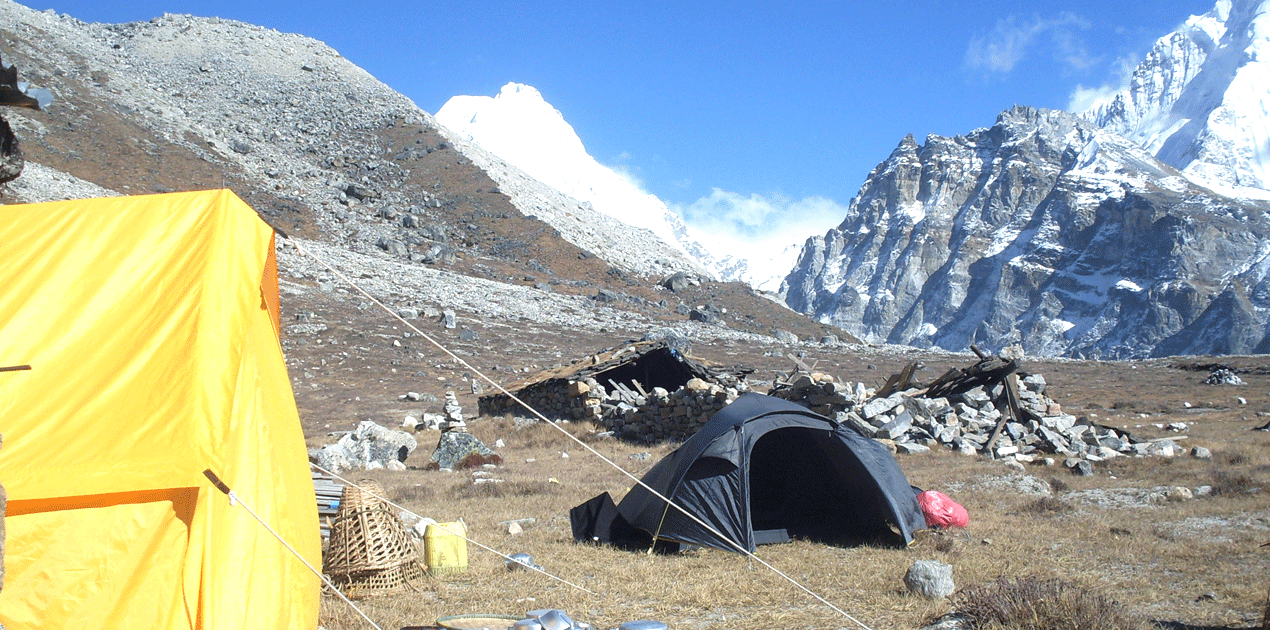
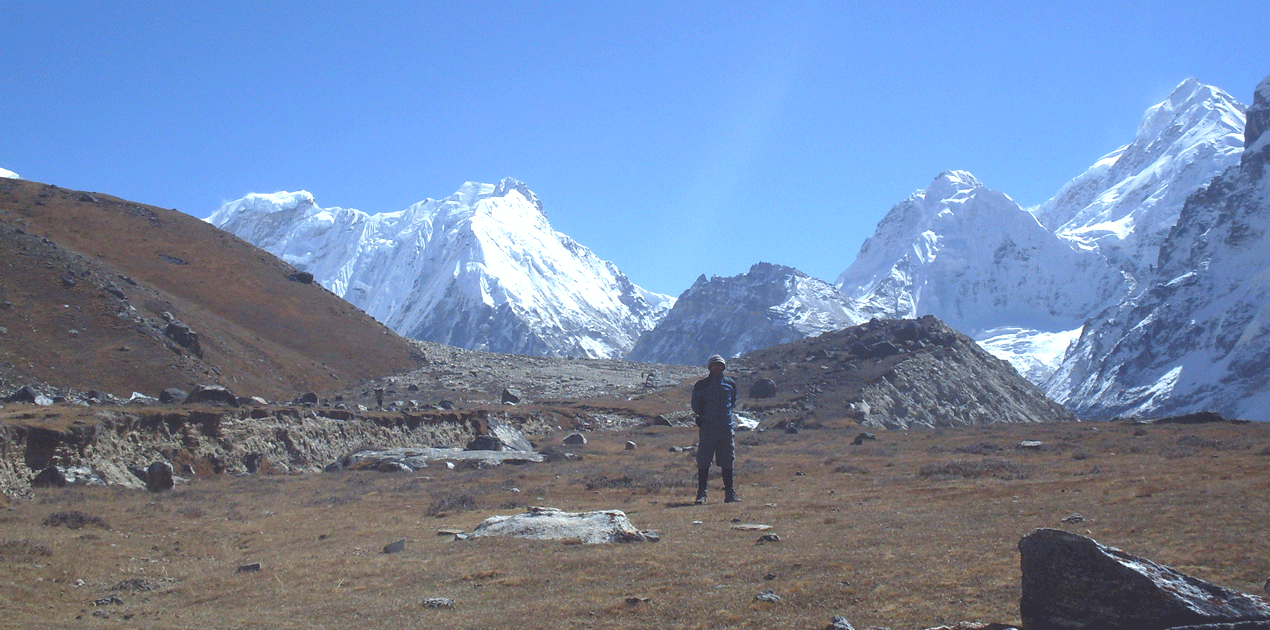
The trekking route leading to Kanchenjunga is traversed by the Tamur River, which converges with the Arun River below Mulghat. This is a region fed by numerous glaciers, contributing to the majestic flow of the Tamur. Among these glaciers, the notable ones include Nupchu, Lhonak, Chichima, Gimsung, Pyramid, Kanchenjunga, and Ramtang, all located on the northern slopes of the main peaks.
Myths and Mysteries Surrounding Kanchenjunga
The enigmatic slopes of Kanchenjunga have given rise to myths and legends. Both Indians and Nepalese have claimed sightings of a mysterious creature on the mountain, which locals often describe as the “demon” of the mountain. Additionally, there is a legend associated with the “Valley of Immortality,” known as Beyul Demoshong in Tibetan folklore. This hidden valley is said to be concealed somewhere amidst Kanchenjunga’s snowy expanse, adding an air of mystique to the mountain.
The Technical Challenges of the Kanchenjunga Expedition
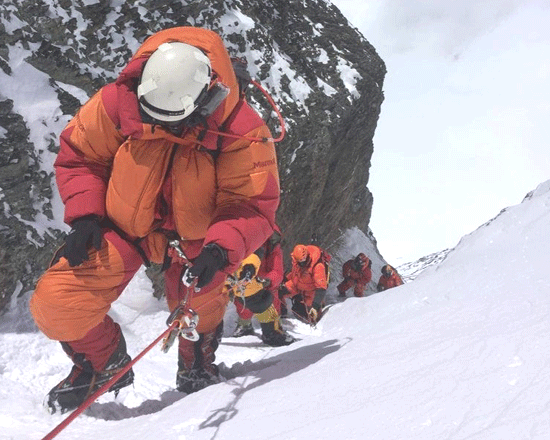
Climbing Kanchenjunga involves a series of technical challenges. It begins with intricate mixed climbing, gradually transitioning into an extensive horizontal ascent beyond 8,000 meters. These factors make Kanchenjunga an exceptionally demanding mountain, necessitating effective logistics and unwavering support. Surprisingly, despite its status as the world’s third-highest peak, Kanchenjunga remains relatively less frequented by climbers, mainly due to the immense technical and physical demands it presents.
Acclimatization
Acclimatization is crucial during high-altitude treks like the Kanchenjunga Expedition. Altitude sickness, or acute mountain sickness (AMS), is a common concern and should not be taken lightly. We prioritize the well-being and safety of our trekkers. Additionally, our expert trekking guides are trained and experienced in high-altitude environments and provide first aid. We schedule a proper acclimatization day at Ramje, allowing you to explore the area and adjust to the altitude. It’s important to note that if you experience severe symptoms of altitude sickness, the only remedy is to descend as quickly as possible.
Physical fitness preparation
To undertake the Kanchenjunga, trekkers need to be physically fit. It is recommended to run for at least an hour a day for 2 or 3 months varying on your fitness level before the expedition. This helps to build the individuals hiking stamina. Additionally, to know the individual fitness level and body adoptation with the high altitute one can choose varies best trekking route for futher training and fitness. Which includes red panda trail treks, Great Himalayan Trails, Three Passes, Everest Base Camp Trek etc.
This preparation helps in acclimatizing to the high altitudes and ensures you are ready for the demanding terrain of the expedition, including the challenging ascent of the Kanchenjunga expedition 8,586 meters.
What’s crucial is a willingness to prepare physically and mentally, and to respect the demands of the environment. Proper acclimatization ensures trekkers can fully enjoy the journey, absorbing the breathtaking landscapes and immersing themselves in the local culture. Ensure that, you bring the recommended personal expedition equipment list. Remember, a quality equipment can make your trip enjoyable, while a poor one can make it miserable.
Choosing the Ideal Time for Kanchenjunga Expeditions
The most enjoyable window for Kanchenjunga expeditions in Nepal typically spans from late March to late May. During this period, the weather is exceptionally pleasant, offering breathtaking views and clear skies. Rhododendron blooms grace the Kanchenjunga Base Camp (KBC) trail, adding a touch of romance to the trek. Rainfall and snowfall are minimal in the Kanchenjunga region during this season, rendering the trail ideal for trekking. With a reasonable level of fitness and determination, anyone can embark on the KBC trek, transforming it into a cherished memory that lasts a lifetime.
Conclusion
The Kanchenjunga Expedition beckons those with a passion for adventure to conquer the world’s third-highest peak. With its rich history, technical challenges, and mystical allure, Kanchenjunga offers a unique and unforgettable mountaineering experience.In the middle of the towering peaks and serene landscapes, you’ll discover a sense of accomplishment that only a journey to the summit of Kanchenjunga can provide.